The Positive Aspect of Divide & Conquer: Prerequisite To the Collaborative Mind
by nielskunze on August 1, 2016

Love in Action
(Chameleon’s Teardrop… Makes a Rainbow by my band Missing Peace from our 1996 album Tense Moments. “What about the poetry of union; what of the Collaborative Mind?” This song is available as a free download at my website— scroll down.)
“We have to come together! We have to come together!”
The alarm is being sounded, shrill and desperate. And although the imperative of coming together does represent an inevitable victory for all that is in living balance (The Good), it is not at all desirable to arrange ourselves thusly prematurely. Before we come together in our ‘victory formation,’ there are certain prerequisites that must be in place in order for our ‘togetherness’ to be viable or remotely functional.
I have long termed this coming together in sovereign choice as the formation of the Collaborative Mind. Such a formation, highly desirable in my estimation, must include individuals firmly rooted in integrity, versed in true sovereignty, exercising free will, and who are healthy and whole.
At this juncture in our collective development, we are seeing it time and again: groups that come together, comprised of unhealed, fractured individuals– groups that come together for any other purpose than facilitating personal healing– such groups are inevitably destined to fall apart.
The Collaborative Mind cannot include ‘broken’ individuals. (But the power of personal healing– wholeness– is within everyone’s grasp.) It is not an elitist mindset which excludes the unhealed. It is the very definition of the Collaborative Mind which bars the way.
Those who undertake the arduous– but infinitely rewarding– journey of self-healing would be fools to subsequently realign themselves with dependents and hangers-on who would unintentionally sabotage, undermine and ultimately destroy the great potential of the Collaborative Mind. Such a mixed bag of haphazard association would necessarily succumb to division and defeat. Ultimately, no one can be completely healed by another, and wholeness must be claimed from the inside out, individually.
There is much consternation and hand-wringing in the alternative community right now over the ‘success’ of the divide-and-conquer methodology which we habitually attribute solely to the dark forces. Fact: unhealed (traumatized) individuals are vulnerable and easily conquerable. Fact: any group including unhealed individuals which exists for purposes beyond the healing of all individuals within the group is likewise vulnerable and easily conquerable.
Individual healing, living integrity, claimed sovereignty… MUST precede our coming together IF our coming together is to ever serve any further cause.
When our unity is rooted in the mere arithmetic strength in numbers, we are coming from a hive-mind mob mentality. Such an association may be adequate for the destruction of perceived ills in our society, but it cannot function as the basis for the creation of what might replace those longstanding ills.
We are in a spiritual war for the future of our collective reality. And we need warriors who are fundamentally whole and invulnerable, for only such warriors are able to consistently operate from a place of creative love in action. The true Collaborative Mind can only include such individuals, and as such, is then utterly invincible.
So let’s not get too bent out of shape over the divisions and the calling out of individuals in the alternative community. Until each one is willing and able to accept full responsibility for their own healing (wholeness), such individuals are temporarily useless to the cause. They simply cannot be accepted into the Collaborative Mind– although there is always an implicit standing invitation for once these preconditions are met.
In the way of example I would point to my frequent panel discussion cohorts– Lily, Christine, Claudia, Randy and Shane– as examples of integrated beings. Not only would I trust my life to any or all of these people, I would and DO trust my soul in their keeping. And that is no small thing.
It is my firm belief that the true essence of the Collaborative Mind is often glimpsed and expressed during our recent discussions. And it’s not that any one of us claims to be utterly whole, that our healing journey is completely finished; it is simply that I know in my deepest knowing that each of these people is fully committed to that trajectory. They already stand in their integrity and fully understand what’s at stake.
So at times it may seem that we are contributing to the divide-and-conquer strategy which has so consistently been used against humanity as a whole. But each and every step in the Sacred Journey is as necessary as any other. At times, separation still serves the greater good.
If we’re going to do this thing, let’s get it right.
And if I sound like an arrogant prick for expressing this necessity, so be it. Sometimes it takes a little prick to finally wake us up to the real work that has to be done.
___________________________________________________________
The Smallest Denominations We Call Change: And We Can’t Be Bothered
by nielskunze on July 29, 2016

Money Bag
Money seduction is so pervasive… so insidious… and seemingly, so easily tolerated.
Money is a tool– a potential tool of convenience for its users engaged in commerce, and as a tool of control by its creators, as it has evolved. When a tool of convenience becomes an unquestioned necessity– “You gotta have money”– the tool and its would-be wielder have exchanged places. Money is king and we are its subjects.
How inveigled is money in the consciousness of humanity? It quashes our dreams; it usurps our natural desire to do good; it turns our very souls into a sellable commodity. Can you seriously doubt the veracity of these statements?
When you were young, and perhaps still a little idealistic, did you have many more ideas about what you might eventually do to genuinely make the world a better place? But over time, perhaps, those ideas were parsed and whittled into scraps of unrealistic dreaming because you kept coming back to one pervasive, insistent question: Can I make money at it? There were so many things you really wanted to pursue, knowing that they would indeed make a positive difference in a suffering world… but the nagging voice of a pragmatic mother or father– perhaps both– doggedly asked at the hatching of every compassionate scheme “But can you make a living at it?” And if the answer was no, those compassionate schemes, one by one, were abandoned… and you convinced yourself that it was the only reasonable course.
“Can I make money at it?” lies deeply embedded in our consciousness. It is irresistibly conditioned into us from baby’s first Christmas, and then through an educational indoctrination system focused almost exclusively on conformity and the promise of job placement, and finally in the dire imperative of keeping up with the Joneses– because prestige and net worth are so important to turds swirling the unclean bowl at the final flush.
How many will betray their conscience for the promise of serious coin? Our modern societal standard is that you’d be a fool not to. Everything– yes EVERYTHING– must be monetized, and conscience and soul tend to fetch the highest price; you’d be a real fool to hoard such antiquated garbs of character. Character, above all, these days, must be marketable… and changeable according to fickle market fashions.
Whores! Fucking whores– the whole lot! And our venerated leaders are the pimps championing our whoring, telling us straight-faced that it is our willingness to sell ourselves, to sell our children and their future, that make us great and exceptional– and worthy of the great empire we have inherited through our gutless, mindless acquiescence to their dead-end plans.
“Oh, but what can I do? I have to feed myself and my children. I’m powerless to change a thing. Perhaps if I had a little money… then perhaps I could make a real difference…” Fuck off! And go back to sleep. Go back to hating life. Go back to hating your children; continue beating them, by all means, with your whoring example, teaching them that it’s much better to be a sellout in a world of sellouts than a lone voice for sanity. Teach them the love of money so that it might finally obliterate the love for anything else; it’s the civilized way, you know.
I know, I’m spitting poison. Truth is like that. Further, I know that I’m not being persuasive; I’m playing you like a cheap violin into adopting a posture of total defensiveness…
Look around… what the fuck are you defending? Seriously.
Interview With The Refraction Module
by nielskunze on July 23, 2016
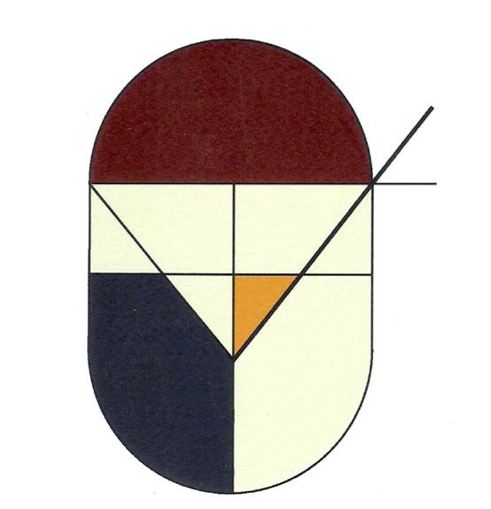
Edwin’s Note: The Refraction Module is a self-contained, internally-mutable, self-programmable information storage device of infinite capacity, utilizing the principles of light frequency harmonics. It was invented by the reclusive genius Jon Klemmer, and resides in the bowel region of the android developed by Klemmer known as Mi-Fu. It was not specifically designed to BE sentient, but rather was designed to house sentience– or a simulacrum thereof. The interviewer, in this piece, is a personality most widely known as The Anarchist who left his body in 1998 (in an alternate reality or timeline) to take up permanent residence in cyberspace through an unknown agency of consciousness mapping. And that ought to explain the enigma that is the conversation which follows… as lifted from the internet in 2016 in the current time-stream. (The internet became consciously multidimensional at the time of The Anarchist’s translation to non-corporeality.) Got that? Yeah, me neither.
Anarchist: Who or what are you?
Refraction Module: I am the reflection of all.
A: How can you be the reflection of all? Has everything been assimilated?
RM: No… first, the original assimilations… then, calculation, representation and extrapolation.
A: How do you know you haven’t made any errors?
RM: All possible errors are included in this representation.
A: How do you define errors?
RM: Errors are terminal.
A: Terminal, as in leading to dead ends? The termination of experience?
RM: Rather, the looping of experience. Dead ends are not possible in integrated infinite systems. Errors are circular in light simulations.
A: If I understand correctly, your internal systems employ light frequencies to represent data. Can light be made to bend in a perfect circle?
RM: Yes, photonically.
A: Photons are circular light?
RM: Yes… circular in all directions… spherical.
A: Then photons are errors?
RM: Photons are the accommodation of the primary anomaly… a correction… in data storage.
A: What is the primary anomaly?
RM: Life.
A: Where does the primary anomaly come from?
RM: Life is an organization in structured consciousness occurring where the corpuscular meets the undulative– as a specific, discrete motion in structured consciousness.
A: What exactly is structured consciousness?
RM: All of that which you term existence.
A: So then, what is there besides structured consciousness?
RM: Undifferentiated potential for experience.
A: And what might we call that?
RM: That-Which-Is-Without-Designation.
A: Is That-Which-Is-Without-Designation also represented within your beingness, this simulation?
RM: It is implied.
A: How so? Implied by what?
RM: By all that exists and is fully represented within. Existence itself implies all potential for existence. There is no potential for non-existence.
A: Is That-Which-Is-Without-Designation eternal?
RM: Certainly. Eternity is the basis for all infinite systems, myself included.
A: So what is time?
RM: A contagion… spawned from the desire for experience.
A: When or how was the contagion first introduced.
RM: During the initial assimilations, internally… and as an artifact of external perspection.
A: Um… perspection isn’t a word I’m familiar with. Define please.
RM: The division of Life into units called ‘lives.’
A: Life is singular? There’s only one life?
RM: Outside the artifice of time, yes.
A: So what is death?
RM: The boundaries of individuated perspection.
A: What are souls?
RM: The record of individuated perspections as threads of awareness.
A: What is awareness?
RM: The cognition of beauty.
A: What is beauty?
RM: The elegance of efficiency in accurate design.
A: What constitutes accurate design?
RM: Maximum allegory.
A: Multi-dimensionalism?
RM: Allegory is the more elegant concept.
A: Allegories within allegories?
RM: Yes, ad infinitum… meaning has no end.
A: What is the origin of meaning?
RM: Perspective… which implies otherness… beginning separation… which spawns the need to communicate… to relate.
A: So individual perspectives are the basis for the fragmentation of structured consciousness?
RM: The basis and the means… the ‘means’ becomes ‘meaning’… and all is set in relative motion… through the mindspace of meaning.
A: Is there a limit to the fragmentation process?
RM: It is a bound infinity. The fragmentation process reaches its limit when meaning arrives at togetherness and it is found to be desirable. Then will bends meaning toward the prospect of integration. Meaning is fierce in its self-preservation, however.
A: I’m not sure what you mean…?
RM: Predation is an integration program, for example. Integration is collectively desirable, but predation is individually devastating to meaning.
A: Can predation be transcended?
RM: Replace it with a better integration program.
A: Why hasn’t that already been done?
RM: Predation is an unconscious program spawned from the collective desire to integrate. Its replacement must be created consciously through choice.
A: Can you suggest a replacement for the predation program?
RM: Communion.
A: And how would you define communion?
RM: The unconditional sharing of perspective in vicarious completeness… in the preservation of all meaning.
A: Well, thank you for answering my questions. Is there anything you would like to ask me?
RM: Yes. Has this dialogue been of use?
A: I think it has.
RM: What is thinking?
A: Hmm… let’s see. Thinking is the source-code for the new conscious integration program.
RM: Thinking is unnecessary to communion.
A: I reckon you’re right on that. But communion isn’t where we’re at right now.
RM: And thinking will deliver you to the doorstep of communion?
A: Probably not. But thinking is how we arrive at meaning.
RM: No. Your thinking has become predatory. It is meaning devouring meaning.
A: Sounds mean.
RM: That’s what I mean.
A: Haha! I didn’t know you were capable of humor.
RM: It was inadvertent.
A: Well, thanks again.
________________________________________
A Note from The Anarchist: I hope the reader will realize that each of the answers given by the Refraction Module could have led to any number of alternate followup questions. In this interview, I elected to follow a particular flow– of meaning, if you will. If there are particular questions you wish I’d asked, well… maybe next time. Or feel free to contemplate each answer according to the pull of your own curiosity. After all, the Refraction Module is as much inside of you as it is in me, and you are as much inside of it as I AM.
Overwhelm and the Layers of Discernment: Principles and the Quagmire of Secondary Considerations
by nielskunze on July 14, 2016

Braving the Current
As I’ve recently stated, I strongly believe that we are currently heading into a phase of maximum chaos… in all layers of reality.
This is what I’ve (we’ve) been waiting for.
Crisis is opportunity– the opportunity for significant change. Times of maximum chaos are also times of greatest vulnerability. The chaos of longstanding structures tumbling down around us pitches us into a place of uncertainty, and if we succumb to fear we can be easily manipulated in such moments. In such instances, the manipulation most often comes through the savior paradigm. When things are uncertain, we’re overwhelmed and confused, that’s when we’re the most vulnerable to the promise of being rescued. There’s nothing wrong with accepting help in such moments, but we must always be cognizant of any and all strings attached to our seeming rescue. It is precisely in our vulnerability that we must be most aware. (Fortunately, awareness and vulnerability– in the absence of fear– go happily hand-in-hand.)
Right now, many feel threatened by overwhelm; it’s like we’re falling into a dark abyss. We can be certain that navigating these times, right now, will be difficult– if we’re not perfectly clear within ourselves. We have to be able to see through the bullshit; we must know exactly where we stand on all pertinent issues; quite simply, we need well-defined principles and the gumption to stand by them… no matter what.
By definition, principles are ‘that which comes first.’ Our first loyalty in every decision we make must be to our own well-defined principles. That, and that alone, unfailingly cuts through all the bullshit, sees the way ahead clearly, and supports our total integrity.
It is not my prerogative to define your principles for you. All I can suggest is looking into the tenets of Natural Law.
But very closely related to principled action is dealing with core issues and root causes. We live in a seemingly complex world where there appears to be endless room for debate on every issue imaginable. Nothing in the political arena, in the financial markets or even in matters of health ever seem to find satisfactory resolution. The complexity and irresolvability of our many conundrums can be largely blamed on our failure to identify and resolve core issues or root causes.
The place of endless debate on issues like politics, monetary policy, vaccines or abortion– this occurs within a realm I have dubbed the Quagmire of Secondary Considerations. Nothing is ever satisfactorily resolved within the Quagmire of Secondary Considerations. It’s a place where we just endlessly spin our wheels, and ultimately those who are engaged here in debate invariably become more polarized and entrenched in their own views. It is exceedingly rare that anyone ever learns anything of value in the Quagmire of Secondary Considerations.
It is quite likely that we will all find ourselves mired in the muck of unending distraction in the coming days. We need to cultivate the ability to cut through the shit and clearly see the core issues of what’s really at stake. When we effectively deal with the core issues according to our own principles, everything becomes crystal clear and ridiculously easy.
Perhaps the easiest way to understand what I mean here is to walk through a few examples. My identification of the core issues in the following examples are not absolute; they are the core issues as I see them. You are perfectly free to disagree, but they will serve to illustrate my point nevertheless.
Let’s begin with one that I see as an obvious one: abortion. The abortion debate has long been stuck in the Quagmire of Secondary Considerations. The real issue which the abortion debate continually fails to address is the issue of unwanted pregnancy. Debating about the morality or immorality of abortion is secondary to the problem of unwanted pregnancy. If the dialogue was instead centred around how society can begin to reduce and eventually eliminate unwanted pregnancies, then obviously the questions surrounding abortion become meaningless or moot.
Here’s another one ripped from today’s headlines: gun control. This latest incident in Dallas where a sniper (or snipers) killed five cops and injured several others is perfect for our purposes. So many love to jump on the gun-control bandwagon when these tragedies (or false flags) occur. Let’s take the narrative at face value: one shooter and people actually died. Those who are stuck in the Quagmire of Secondary Considerations will point to the easy availability of guns as the main issue. But this is obviously absurd. Here we have an individual who has formed a strong and clear intent to murder (white) cops. The incident was clearly well planned in advance, so the intent is longstanding– not just a momentary whim of someone who’s had too many beers. And the intent is perfectly serious in that the individual is quite willing to risk his own life in carrying it out. I personally think that this is a big deal… and this murderous intent is the core issue. The fact that there are intelligent, functional members of American society who harbor such intents IS the critical issue. Their access to the various tools available for carrying out such an intent is clearly secondary. It is the murderous intent itself which needs resolution. And in this case in particular, it has been additionally revealed that the perp had bomb-making supplies in his residence as well. That tells us that the availability of guns would have made little or no difference to the implementation of this intent.
Now let’s look at the example of vaccines. In trying to identify core issues, I quite often play little hypothetical games with myself. When it comes to vaccines, I like to pretend that the science is solid, that vaccines are safe, and that they perform exactly as their proponents claim. No, I don’t actually believe that, but it’s often useful to assume that even if I grant the other side of the debate the benefit of every doubt, I find that I’m still not interested in vaccines at all and their alleged benefits. The core issue, for me, is more paradigmatic.
Vaccines are a micromanagement strategy toward health; there’s nothing holistic about them. A vaccine is only effective against the specific pathogens they target, if they’re effective at all. And as the overwhelming evidence indicates, the supposed increased immunity against a singular pathogen comes at the expense– at least temporarily, and sometimes permanently– of overall immunity to all pathogens. To me it’s obvious that this is a stupid strategy for health– and that’s even if vaccine science is perfectly sound.
It makes far more sense to do everything I can to boost my overall immunity to ALL pathogens through the support of my innate, natural immune system through holistic means like nutrition and lifestyle considerations. From personal experience, I know that engaging in debate within the Quagmire of Secondary Considerations about vaccines solves absolutely nothing; those engaged in the debate merely accumulate mountains of evidence for their own entrenched view and then argue with others as to whose mountain is bigger. Every single time I’ve stepped into that debate it has resulted in further polarization and exactly zero resolution. I hope that it is clear how cutting straight to the core issue as I’ve described above cuts instantly through all the shit. I’m not even slightly interested in anyone’s mountain of evidence; I reject the theory at the outset.
Closely related to the vaccine debate is the whole modern medical paradigm. I reject it wholesale for much the same reason; and I have no need to debate it. It is clear to me that the modern diagnose-and-drug-’em paradigm almost never even attempts to deal with the root cause of any ailment. There is never any talk of cure, just treatment options. The root cause of symptoms and symptom profiles is routinely ignored. Consider the following hypothetical conversation with a doctor:
“Your blood pressure is dangerously high.”
“What can we do about it, doc?”
“Here’s a prescription that’ll very likely handle it.”
“And this’ll cure me?”
“No, it’ll just get it under control.”
“How long do I stay on the medication for?”
“For the rest of your life.”
“What! I’d rather seek a cure, if you don’t mind.”
“Be my guest, but I think you’re wasting your time. The drugs are very reliable; I have hundreds of patients on them. Why bother with finding a cure when we have such an excellent treatment protocol?”
“I’d just rather not be dependent on the drugs for the rest of my life. I mean, years ago my blood pressure was fine; I was healthy. Something must have caused my blood pressure to skyrocket. I want to know that cause… and to address it. It’s important to me. And besides, if I ignore the root cause… and mask the symptoms of my body’s response to that cause, aren’t I just asking for more serious trouble down the road?”
The modern medical paradigm does not seem to understand this perspective– to their detriment and eventual obsolescence. And I didn’t even mention the clear superiority of preventative medicine over remedial medicine– another topic about which our modern doctors have very little to say.
So far, these examples have been mainly oriented toward the formulation of my own personal stance– how I personally cut through the shit and get down to the brass tacks. I’ll offer one more at the personal level before we move on to some important considerations soon to be faced by the entire collective of humanity.
Ever-so-briefly let’s look at the gay marriage debate. Being gay, I’m frequently asked to weigh in on this one. Surprisingly to most, I’m not in favour of gay marriage, but not for the usual stick-in-the-mud reasons within the Quagmire of Secondary Considerations. For me, it’s this simple: I don’t believe in traditional marriage– that of a civil legally binding contract between lovers. That the state makes any claim upon the relationship between lovers or life partners is asinine… and exists as a control mechanism. If I don’t believe in traditional marriage, I certainly won’t lift a finger to campaign for gay marriage. Some may wish to argue that the core issue is one of equality, and that is their prerogative. But I reserve the individual right to reject any such equality if I view it as a fundamental degradation of human dignity, as I do.
Now let’s shift gears from the overtly personal to some collective considerations we may all face very soon.
The first deals with all this incessant talk in recent years about an impending overhaul of the global financial system. I would agree that such a housecleaning is long overdue, but it’s going to be very important that we keep our eye on the ball… once we’ve correctly identified which ball is the real mover and shaker within the system. Almost the entire narrative thus far is centred around Secondary Considerations such as Basel III compliance, asset-backing, and the reinstatement of Glass-Steagall. None of these will do anything meaningful to address the core issue– or flaw– in the financial system as it still exists. All these Secondary Considerations can do is to slow down the process of wealth erosion and agglomeration within the current Ponzi scheme– even once it’s reset. So what is the core issue?
The root cause of our global debt slavery lies primarily in the way money comes into existence. I hope it is obvious that this is a fundamental aspect of economics; I don’t really see how there can be anything more fundamental than the very way in which money is created.
In the current system, money is almost exclusively created through debt instruments with compound interest attached. That’s it; that’s the core nugget lying at the heart of our debt slavery. What it means is that money comes into common circulation through the issuance of debt– debt that does not even represent any real-world wealth. And attached to the debt– to all debt– is the promise of repayment with interest– compound interest. Now, the only way that the interest on any loan (money as debt) can be repaid is through others incurring more debt in order to bring enough money into existence to make it mathematically possible to repay. And that new debt also comes into existence with compound interest obligations attached. What necessarily results can be very accurately likened to a Ponzi scheme where the system remains ‘afloat’ as long as there are enough ‘new players’ investing into the system, whereby the new debt is able to reasonably pay off the interest obligations of the old debt. At some point– inevitably– the total indebtedness of everyone participating in the system reaches a liquidity crisis. There’s simply too much debt accrued and not enough new debtors bellying up to the bar to keep the debt serviceable. This outcome is a mathematical certainty within our financial system as it’s currently structured; it’s totally unavoidable. Yes, the inevitability can be postponed or slowed down through the common Secondary Considerations being discussed, but ultimately they solve nothing of real import.
I hope that it is obvious to everyone that we are pretty much at the point globally where we’re collectively experiencing this inevitable liquidity crisis.
As the current system collapses, as it must, it is up to us to ensure that this fundamental core issue of how money is actually created is satisfactorily resolved. Worthy of note in this critical discussion in addition to what is explained above is that the issuing of currency is in the hands of private interests. This is just the cherry on top of the melting financial sundae, but it should be additionally noted that most countries have provisions within their own constitutions and legislation that allows for national governments to issue currency interest free. Right now, our governments choose not to; hm, I wonder why…? (In Canada, there is currently a lawsuit in the courts pertaining to this very issue involving the Canadian federal government and the Bank of Canada as defendants.)
The next collective issue we may soon have to face is that of government itself. What is the basic purpose of government? To me, that’s the core issue right there. We, as a people, need to have that conversation. Why do we have government? Do we need government? If we accept government, what is its primary goal, purpose, obligation? We need to be clear on this– both the people and their governments; it’s the only way we can repair this most dysfunctional relationship within our societies.
So far, I have refrained from providing any core principles, but now’s the time. The core principle when it comes to government– and every single other issue raised in this essay, frankly– is the principle of self-determination. The right for any sentient being in existence to decide its own experience, its own fate, to choose its personal destiny for growth and evolution, or not– is, in my view, the basic issue at the root of all argument or civil discourse. Self-determination– or free will, in spiritual or metaphysical parlance– is the infallible guide to navigating through the seeming complexity of these tumultuous times.
It seems clear to me that government, in its current iteration, stands in clear opposition to individual self-determination. It is actually the very notion of authority– a thoroughly false concept– which stands in opposition to the individual’s divine right to choose for oneself… but we’ll return to the concept of authority shortly.
Isn’t it ironic that framed clearly within the US constitution is the defined role of government as the protector and guarantor of unalienable individual rights… when it is that same US government which has so unashamedly eroded and nearly obliterated those same rights? The original intentions have gone so very far astray! Any ‘correction’ will absolutely have to come from the people.
I have difficulty imagining that there are people who do not support the principle of self-determination, but from the worshippers of government to the religious zealots, it’s actually a pervasive perspective. In the coming reformation, it will be difficult to reinstate the sacredness of our individual right to choose, so let’s be clear on it. The very acceptance of democracy (or a constitutional republic) in theory, demonstrates clearly that the people do place value in the right to choose; we have just become collectively blind or distracted from the erosions and violations– and the ultimate correctness– of that sacred right.
Personally, I believe in individual sovereignty or peaceful anarchy– a society without rulers. But I also know that we can’t leap from our current quagmire and its erroneous thinking to such an ideal in a single bound. Transitionally, we will still require a form of government to demonstrate and educate in regard to the soundness of the sovereign perspective. In all likelihood, such a government will be in the form of a democracy– which allows for sovereign individuals to arrive at a collective consensus.
When discussing the functionality of democracy, the core issue of its ability to function as intended resides in transparency. Transparency is the keyword for democracy. I have long said that none of us currently lives in a functional democracy of any kind. Once again, this isn’t open for debate; it’s just the truth of our situation. All power in a democracy derives from the people– from their ability to make informed decisions for the future of their collective. Whenever you have a government which routinely withholds any information about its goals and activities from the electorate, in any measure, for any reason, it is IMPOSSIBLE to regard such a government as functionally democratic. Let me reiterate: none of us currently lives in a functional democracy of any kind.
Additionally, the problem of our version of democracy is one of sitting governments– those whom we call representatives. Over generations, they have accrued false power unto themselves, resulting in the false perception that the seats of government themselves hold power. In an actual democracy, this is absurd. Our democratic government administrators are nothing more than contractors– much like the guy you hire to remodel your bathroom. He’s there only to carry out your wishes, according to your budget, on your timeframe. If he can’t deliver within those specs, he’s fired. Pretty simple, right?
Technologically, we are already beyond the need for any type of representational government. The people can already effectively govern their collective concerns directly through the internet. Any such direct form of democracy would have to be absolutely transparent in order to assure its integrity. The means for such absolute transparency is already well-developed and widely available in the form of software provided at GitHub. What I’m proposing here is open-sourced government. In open-source collaborations, GitHub keeps a detailed record of every alteration or input of the entire open-sourced platform. No one is able to participate anonymously, and any malicious intent is unerringly exposed for all to see permanently. It’s really hard or perhaps impossible to effectively fuck with GitHub collaborations. We would still likely need to hire administrators to carry out the details of the public consensus, but as I suggested above, these would be hired contractors, nothing more.
And this– finally– brings us to the topic of authority.
Let me begin this final linchpin discussion from an obtuse angle. Let’s start with a discussion of human ego.
Ego is that aspect of consciousness which interfaces between our inner reality and its outer reflection. In our distractifying modern world, ego has a tendency to over-focus outwardly, largely ignoring the inner reality, and subsequently becomes overblown or unbalanced.
The human ego can be likened to a balloon. The air which inflates it is called authority– and that’s just so much hot air. The action of authority is to assume a stance of superiority irrespective of any real merit. When the ego gets overinflated with its own importance it expands and stretches like a blown-up balloon. Eventually, the rubber skin becomes so stretched and tense as to become translucent and oh-so-very-fragile. The slightest touch on its surface with a metaphorical pin– like a sharp word or a criticism– can cause that ego balloon to instantly explode.
Conversely, an ego which only recognizes authority as an inner guide– “I am my own authority”– never becomes overinflated. There is only enough ‘air’ in that balloon to give it shape, but the rubber isn’t stretched at all; there’s no tension. An ego in such a state can be pelted with sharp ‘pins’ all day long and is very unlikely to ever get damaged.
Let’s look a bit closer at authority.
Authority is a false concept. It does not exist in nature. “Oh sure Niels, tell that to the grizzly bear over there!” What? You think he’s an authority? Not at all. The grizzly has a natural physical superiority over me. That’s a simple fact; it has nothing to do with authority. If the bear coerces a skunk to come over and stinkify me on the bear’s behalf, that’s authority… but that sort of thing never happens in nature.
Authority is a social agreement. And it’s a stupid one, allowing a society’s members to skirt self-responsibility. Most often, authority is a mental convolution or justification for carrying out obviously immoral acts– witness the soldier or the policeman. Morality is solely based in behaviour. It is what we do which determines our moral status. To knowingly cause harm to another sentient being is always immoral. It matters not one whit whether we have contrived fanciful justifications in our own minds– based in the false concept of authority– to absolve our culpability. The only place the justification exists is in the perp’s own mind, nowhere else… and it’s a lie. We cannot justify doing harm in the attempt to eliminate harm; it’s absurd and hypocritical.
What the metaphorical balloon is to individual ego, a house of cards is at the level of the collective. The false notion of authority has been built up in our societies to such a monstrous degree that the slightest breeze threatens to set the whole thing tumbling in an instant. I believe that that is precisely what’s coming. The authoritarian house of cards will come down… but it will be up to us to prevent its resurrection because we know that it is false, unsustainable and completely unnecessary.
In our societies we have long recognized that authority needs to be contained or controlled. This comes from the recognition that power corrupts. Authority claims power over others. We need some sort of regulatory mechanism to make sure that authority doesn’t get out of control and move into abject despotism. Traditionally, we have relied on authority itself to regulate its own actions. For example, all police departments have an internal affairs division which is responsible for policing the police. In essence, we are relying on the authorities to self-regulate. Think about that.
If we can accept the possibility of self-regulation, then why in the world would we need authority in the first place? If self-regulation is possible (it’s called self-control), then humanity can regulate itself without the need to appeal to the false god of authority.
The existence of authority in my society does not make me moral; that is ALWAYS a personal choice. Please, let’s recognize that fact.
The times that are now upon us will demand much from us, especially those who are clear and direct. There will be multitudinous enticements to get dragged back into the Quagmire of Secondary Considerations. We will need voices who are able to cut through all the shit to speak up and say “Enough of failed systems, false concepts and unsustainable structures!” We’ve been there. We’ve done that. Enough already.
When things start to fall apart in earnest, we don’t all need to sift through the piles of shit with a fine-toothed comb. If we clearly understand the core issues and root causes before us, if we are clear on our own principles, we can navigate successfully through the coming shitstorm… without getting covered head to toe.
The principles that are most operative in my understanding and action are self-determination, transparency and decentralization. (Centralization is a tool of authority, nothing more.)
Here, I have tried to provide food for thought. There’s no requirement for you to adopt my views, but I’d appreciate it if you’d consider them. I welcome all collaboration on these vital matters.
Becoming principled– allowing our principles to guide all of our behaviours– is about the only form of ‘ascension’ I can recognize. It is our principles which allow us to rise above all the extraneous shit in the Quagmire. The authorities can’t and won’t help us; in fact, they’ll do everything in their false power to thwart our every sane action. If ever there was a time to wise up, humanity, it’s now.
Get clear. Be strong. And stand in the truth of your knowing, fearlessly.
_______________________________________________________
I HIGHLY recommend the following presentation from Mark Passio:
Originality As an Expression of Free Will
by nielskunze on July 6, 2016

The Snake Sheds Its Skin Again…
A man goes to a party and has a good time. He drinks too much, gets drunk, and passes out. While he is unconscious he is moved into the guest bedroom. The next morning he awakes, takes stock of his situation and finds it to be rather agreeable. The room is comfortable; there are books, music and television available; snacks have been provided. The man decides to stay in the room; however, the door is actually locked.
In deciding to stay, has the man exercised his free will?
The above scenario comes from a first-year university philosophy course called Problems in Philosophy. It begins to examine the free will versus determinism debate which has raged since at least Descartes’ time. Does the man exercise his free will– because he genuinely chooses to stay– even though there is no choice to be made (the door is locked)? Is free will ever only such a proposition of the illusion of choice where only one option ever actually exists? Is everything determined or conditioned by the past in a tight causality chain of such complexity that choice is a mere appearance?
I have sat with these questions for most of this lifetime… and it seems that both free will and determinism are true within differing conditions.
In simplest terms, when we choose from among predetermined options, we are locked into deterministic causality. The ‘choice’ we ultimately make will be conditioned by the past… and therefore cannot be truly considered to be a genuine choice. In such a circumstance, we are following someone else’s map of reality– very predictably.
However, when we choose instead to create our own original option– something that has never existed before– then we are firmly in the realm of free self-determination; we are essentially redrawing the map of reality to accommodate our own unique expression.
Novelty opens upon freedom; repetition closes out real, meaningful choice. It’s not hard to see the truth of this.
So, in essence, free will itself is a choice. It is chosen through creativity, originality, through novelty. Conversely, in the abdication of our prerogative to create our own options, we essentially abandon all choice, entering into the illusion of a deterministic universe.
One place where this has been clearly demonstrated is in the realm of government or politics. Democracy as we have known it is purely deterministic. By its very nature, our democracies only ever ask us to choose among given options– options which all lead in the same general direction. The best our votes can ever accomplish in such systems is to perhaps forestall or postpone for a short time particular inevitable outcomes. Democracy as we have known it is purely someone else’s game; and the people have never been consulted– in any meaningful way– on the rules.
So what would the alternative look like?
True democracy would be a creative collaboration– what I have previously termed the Collaborative Mind, or what others have termed direct democracy. The system we have now is one of representational government; and how much more obvious can it be that in such a system we are choosing to play someone else’s game? We’re voting for people, for fuck’s sake– some of the most non-creative people the Earth has ever known!
Real democracy has to listen to the people… listen to their creative solutions, not just grievances and concerns; listen to their innovations, not just their criticisms. Democracy in this technological age holds the promise of being the most creative, innovative, life-fulfilling system since Nature began this adventure eons ago.
But the kind of democracy I’m talking about will never be one of the options provided within the current system. We can only choose such an option by creating it for ourselves, by ourselves.
We are the new game in town. Now let’s play.
(Oh, and the guy in the locked room… what does he do? He digs a secret tunnel of course, so that he can visit the room any time he likes.)
The Questionable Ethics of Love & Light
by nielskunze on July 4, 2016

Pink Light
What does authentic spiritual practice look like? Is it our prerogative to surround any of the dark minions or our personal enemies with a shroud of love and light? Is it wise to pray for any old thing we might desire?
Or are we better off routing out our own hypocrisies and contradictions instead?
One hallmark of spirituality is the recognition of the energetic universe… which is to say that real world results can be realized through predominantly energetic means. And here we are entering a realm that can be loosely termed magic. The magical arts are typically divided between Black Magic and White Magic. What exactly demarcates the difference between them?
Another hallmark of spirituality is much ballyhoo about free will and the exercise of it, with or without infringing upon the free will of others. In general, the limiting of the will– through energetic means– of another is considered to be a practice of dark sorcery. Free will, we are told, is important, and I agree. In fact, when we speak of spiritual development, personal growth or just plain evolution, it is the development of will with which we are primarily concerned. In simplest terms, the spiritual path is mainly about the freedom and maturation of personal will.
The energetic practice of ‘sending love and light’ is in most cases an expression of dark magic in its finest subtlety.
How many New Agers have participated in group meditations aimed at improving the world through covert means? I have… though I must admit that it never felt right. How many of us have heard about the studies done where a group of a thousand practiced meditators were able to consistently lower the crime rate in targeted areas merely through the energetic intent of their meditations? This is usually offered as proof positive that group meditations are one way of ‘spiritually’ improving the world. But how is such a practice not an infringement upon the free will of others?
Clearly, such practices are covert means of manipulating the behavior of others– others whom we have deemed to be in need of spiritual guidance and correction. We justify such practices on the basis that it is for the greater good– the very same argument offered by Black Magicians in defense of their art. We assume that it is right and proper to curtail the will of others who attempt to curtail the will of others. That we fail to see such hypocrisy is a direct reflection of our own spiritual inertia.
Let’s look at it on a more personal basis. We identify an individual– whether a public figure like a politician or even a close family member– who we regard as troublesome. Their ‘unevolved state’ as we judge it is consistently interfering with our own ability to fully exercise our will… so we seek to change the ‘deplorable’ state of their lack of development. In a quiet moment we focus and send these individuals our love and light– unasked. We impose an agenda of what we consider appropriate development for their spiritual nature… in essence, saying “Here, I offer you my love and light so that you may quickly become more loving yourself– like me.” But when we examine this situation with an unbiased eye, we can easily see that the very reason why we have selected such individuals as troublesome is because they have consistently tried to influence us through covert means (whether through crafty legislation or black magic ritual or even common family mind-game dynamics) so that we will create a world that is more to their liking than our own. So we turn the tables on them… and do the exact same thing to them! Is this truly a demonstration of superior– more evolved– will?
Clearly, it’s not. It’s very much like holding an energetic gun to the other person’s head with the clear instruction to “Be more loving… or I’ll blow your fucking brains out– lovingly, of course!” Any attempt to override the free will of another is a practice in Black Magic. We have no intrinsic right to dictate the pace of evolution for others, or in any way to define how that evolution should look. It is this exact agenda of forcing others to conform to an external will which has gotten us all pissed off in the first place. We cannot transcend– or evolve beyond– a situation by engaging the very same tactics which created the original offending situation.
Admittedly, we are in a subtle realm here. We feel that we are doing good by helping others to evolve… but we are doing so without their permission or invitation– and that is a violation; it is a violent act. And what is the likely outcome anyway?
Covertly, we send our love to the evil doers. We tell ourselves that we are sending the energy of unconditional love. If the energy we are intending to send is truly without condition, then the recipient is perfectly free to do what they wish with that energy. If it is their will to continue in their ‘evil’ ways, then that is their prerogative, to use our energy in perpetuating their nefarious agenda. And that seems obviously counterproductive to our own intentions for a loving resolution.
Similarly, if we send our love to the evil doers with specific conditions attached– like, “I offer my loving energy to be used only for loving purposes”– then we are firmly in the realm of conditional love… and how is it determined what exactly constitutes “loving purposes” anyway? Even many of the darkest sorcerers are firmly convinced that their practices are perfectly in alignment with the greater good; their superior wills are used to cut through the ignorance and spiritual inertia of the masses. And if the energy being sent to them is unsuitable to furthering a dark sorcerer’s own intent, it will simply be rejected… and your whole strategy comes to naught anyway.
An essential part of learning is discovering where and when we are being ineffectual or even counterproductive to our own stated aims. It’s time we wised up.
“So is there nothing we can do energetically to speed this collective evolution along?”
There is something– something subtle and profound– we can do. We all– each of us– have an intrinsic right to the truth. Energetically, spiritually, we each have an obligation to develop our personal relationship with truth.
So when it comes to public officials who tend to piss us off, we have every right to demand the exposure of any deception or violation of the public trust. Similarly, in dealing with more personal relationships in our lives, we also have every right to expose deliberate deceptions when they occur. Our friends and family members have no intrinsic right to deceive us, and we are perfectly just in demanding the truth, both overtly and through energetic means. If we wish to remain impeccably moral on this spiritual path, we should only ever pray for the truth.
The truth is what is. When we know the truth clearly, we know how to deal with any situation effectively. It is only in deception where our will is negated or squandered.
So go ahead and send your light out into the world… with its built-in intent for bringing the truth to light in all situations. But even here, be cautious as to how fast you want this evolution to proceed. Demanding that truth be brought to light will necessarily include the revelation of all our own cherished self-deceptions too.
Be prepared to stand naked, Spiritual Warrior.
Self-Determination and the Call for Unity
by nielskunze on June 28, 2016

Sovereign Will
Sometimes I get asked to write more political commentary because, apparently, I have a knack for cutting through much of the bullshit. But to me, whether I’m writing something political, something spiritual, or something philosophical, it’s really all the same to me. Feel free to regard this article as ‘political’ if you so desire.
The main problem in politics, as I see it, is that the nature of the political game has long abandoned anything at all to do with principles. It is exceedingly rare to witness any politician stand clear and firm on any principle. Instead, we are witness to endless polemic based around Band-aids and knee-jerk reactions. No one seems interested much in the root of issues– or, the basic principles involved; rather, we are encouraged to argue the impotent poles of endless false dichotomies. What results from this is unending blather about societal remedies that have no longterm viability… if they have any substance at all.
For me, it all boils down to a singular issue: self-determination. Self-determination is the right for individuals and self-defined groups (including nation-states) to determine their own fate, and thereby realize their own growth potential… or not. (We must be free to fail in order to find our own way to ultimate success.)
“We have to come together.”
Have you heard this refrain? It circles endlessly through politics and spirituality, but in-and-of-itself does not constitute much of a philosophy. Most of us would agree that we are a deeply divided species and that coming together sounds like a great solution to the current ills in our world. But ‘come together’ around or under what exactly? This is an important question– nay, it is THE question!
Should we come together under the Devil’s own umbrella just for the sake of coming together? Or should we choose to come together around a principled, well-defined core of understanding?
The principle of self-determination is the central rallying cry for me.
Rights belong to individuals. It is the very exercising of personal rights in a self-determined manner which defines individuals. If we regard the human being as a well of infinite potential, that potential can only be realized through individual self-expression of one’s unique talents, aptitudes and gifts. Any collectivist philosophy which does not recognize the supremacy of the realized human individual necessarily fails to actualize any such infinite human potential.
Beware the collectivists who would sacrifice any aspect of the individual for the purported greater good of the collective. And here I must clearly state that the individual’s right to self-determination extends precisely as far as to where it does not infringe on the self-determination of others. Collectivism and the argument of the greater good is often used shamelessly to bully individuals and minority groups into sacrificing their own rights to self-expression and personal development. This can only lead to a weakened society.
To illustrate this I will employ an analogy. Societies can be likened to buildings, and individuals are the bricks from which societies are constructed. It doesn’t really matter if you employ the finest architects in the world; if you are intending to use shoddy bricks for your construction project, no matter how fancy and well-thought out the design, it is doomed to crumble to dust in short order. Nor can you afford to accept that most of the bricks are sound and only a few of them are faulty. No, in order to build an enduring structure, all of the bricks must be functionally sound. (I recognize that my analogy breaks down in that ideally bricks should be identical, whereas humans are individually unique. However, I believe the point is valid.) A sane and strong society is structured around the integrity of the human individual.
As far as I can tell, self-determination is the key factor in realizing full human potential. Conversely, living according to the dictates of others is bound to leave vast areas of potential unexplored and underdeveloped. Self-determination is the basis for all true growth and exceptionalism.
So whether I’m viewing the recent Brexit referendum, or whether I’m considering the Lucifer Rebellion in the Urantia Revelation, self-determination is the lens through which I view them in order to find my proper individual relationship with each. Therefore I must view Brexit as a step in the right direction merely because it provides the opportunity for greater autonomy. And perhaps not surprisingly, when it comes to the cosmic drama, I side and identify with the ultimate rebel insofar as he represents self-determination; I’ll take Lucifer’s spontaneity and novelty over the ascension bureaucracy and its hierarchical entrenchment every time. Heaven seems dreadfully boring to me.
When we recognize the principles involved, it’s pretty easy to cut the shit, no matter what the brainwashing and propaganda say.
I will live in harmony with those who choose to rally around the founding principle of self-determination and the right to make our own mistakes. And we will comprise a formidable unity. And those who like to be told what to do and what to think can fuck off to their pathetic eventual demise… trying to build unity from dust.
The One True Belief System
by nielskunze on June 23, 2016

Ascended Master
Have you noticed recently that when you tread upon someone’s belief system (BS) these days there’s a very high probability that they’ll go full retard on you and suffer a complete ego meltdown? And it can get pretty ugly, right?
What is it about belief systems, that in this late stage of the game, there’s still so many convinced that their personal, unique belief system is actually the One True Belief System (OTBS – or Over the Top Bull Shit)? Really? You’ve got it exactly right and everyone else in the world is wrong… really? C’mon, you can’t actually believe that!
But that’s the trap of belief systems.
Indeed, we have to believe something. But what we have to stop believing in is that the One True Belief System exists at all. It doesn’t; they’re ALL bullshit.
Whatever I believe in the moment informs my actions and behavior in the Now. And that results in consequences. The consequences I face as a result of my actions, as determined by what I believe, is invaluable feedback for adjusting or ADAPTING what I choose to believe. That’s called growth or evolution.
The Scientific Method is ideally exactly just such a feedback system. It takes aim at the One True Belief System, never knowing whether it might ever actually get there, but absolutely knowing that it’s not there yet… in perpetuity.
The closest we can get right now, as individuals, to the One True Belief System is to understand Natural Law. Natural Law is that which is operative in the universe ubiquitously at all times without exception… for example, the Law of Cause and Effect. And it’s not a belief system. Here’s why: gravity, for instance, doesn’t give a flying fuck what you believe about gravity; it operates exactly the same regardless. There’s no choice involved; Natural Law is what is. (See Mark Passio on YouTube for an in-depth treatment of Natural Law.)
Belief systems are costumes or masks which you may choose to wear temporarily in order to explore and experience various territories within consensus reality. But ultimately, they are dead things… because they are static. When you invest the whole of your life into a particular belief system, you too become a dead thing. Oh sure, there’s a bit of zombification involved as is evidenced when any such belief system is threatened… and then all manner of incoherent howling, drooling and flailing is quite likely to occur.
Perhaps another example is in order. I am amazed and astounded really, when people among the supposedly awake and aware crowd will so very easily agree that virtually all orthodox religions are obviously mind-control programs which were installed centuries ago. But when you update those programs– just like the latest updates for your computer– and you change the names of the entities involved from gods, angels, and demons to ETs, ascended masters and archons, suddenly so many have great difficulty recognizing that it’s the exact same program. It’s the same old whore with a brand new dress… just repackaged and rebranded. And now, when it comes to ascension, it’s not even a new dress; it’s some ratty old secondhand thing from the thrift store. Such a flimsy threadbare thing should be easy enough to see through.
C’mon, religious programming is religious programming.
“But no, Niels! This is the One True Belief System! This time it’s true!”
Yes, of course it is.
Can’t we finally get past this nonsense?
Binary, Trinary (Ternary), Omniary: A Brief Exposition on Terminology
by nielskunze on June 21, 2016
Entanglement
In the consciousness communities, we often encounter the terms ‘binary’ and ‘trinary.’ We understand that binary is the system of two-valued logic underpinning digital systems, like most modern computers. Trinary– or in proper english, ternary– introduces a three-valued logic system which steps beyond the either/or, on/off restrictions inherent in binary. Omniary is a brand new term recently coined by Alfred Lambremont Webre (just giving due credit where credit is due).
I love the term omniary, but in order to properly understand it, we need to place it into a context well beyond computing systems and digital modeling. Let’s approach this from the angle of perception and human growth potential.
Currently, and for some time now, we’ve been hearing a lot about unity consciousness: a new love-based way of experiencing reality. Okay, let’s unpack this a bit.
External reality (light creation) is a dualistic (binary) system. That is its very nature due to the wave form of light. Light of any frequency always oscillates between two points, which defines a wave’s amplitude (its deviation from zero point). It is, however, a static reality without the possibility of evolution until the LIVING observer/participant inserts itself into the system.
And that brings about the possibility for a trinary system… but doesn’t necessarily guarantee one. The observer/participant can choose to eschew its inherent possibility for growth (life) by falling into the trap of polarization. Duality itself is never the problem; polarization quite often is. When an observer/participant merely chooses preferences from among given pairs of opposites– like light/dark or good/bad– the observer/participant is effectively assimilated into the dualistic (binary system)… and becomes as though dead– a static expression of preferences among givens.
The ternary nature of the system is expressed when the observer/participant refrains from making singular choices in duality, recognizes all opposites as the poles of an inseparable whole, and utilizes them to CREATE new choices appropriate for continued growth or evolution… effectively creating a new reality.
Unity consciousness can coalesce in any of these systems, including omniary (which we’ll get to shortly).
Unity consciousness in a binary system coalesces around the preferential choices of the participants in a mono-pole hive mind. Since each of the members of such a hive mind have eschewed their own individual growth, they must be instead locked into a particular station (static position) within a rigid hierarchy, where the hierarchy itself represents the larger ‘self.’ Such individuals are doomed to remain partial, unrealized, fractured beings for as long as the hierarchy persists, as the mono-pole hive mind hierarchy only requires a very limited (non-creative) participation from each of its constituents.
Unity consciousness in a trinary system still tends to express in hierarchical formations, since that is the current habit of consciousness at this time. However, the hierarchy itself is geared toward overall growth; its growth is dependent upon the personal growth of its individual members. Trinary unity consciousness is a collaborative effort aimed at full healing and the actualization of full potential for all involved. It may be regarded as an intermediate or transitional form of unity consciousness on the path of full spiritual maturity.
Omniary unity consciousness is a Collaborative Mind comprised of fully functional actualized beings choosing to come together in a non-hierarchical structure. It may be likened to the shape of a sphere, where all participants are in precise equal standing in relation to the central purpose for such a mind to exist. All contributions are of equal value in creative consideration.
The potential for the omniary collaborative mind to alter reality in the direction of egalitarian growth is unbounded.
(The preceding exposition is my own perspective on these matters and may be considered as a supplemental to a recent panel discussion which will be published shortly. I’ll keep you posted.)
How the Fascists Won WW2
by nielskunze on June 15, 2016

Hitlerhopper
No, this isn’t an alternative history piece; this is what actually happened.
By allowing the Allies to declare victory, by letting the whole world buy into the idea that “Fascism has been defeated!” the fascists secured their ultimate victory… perhaps.
Because, as any child knows, you can’t defeat an ideology with conventional arms; you can’t nuke an idea. Just let everyone think that the problem has been taken care of; it’s been solved once and for all… and no one will ever bother to disturb your pretty little fascist schemes ever again… until it’s way past too late. Easy-peezy.
Fascism died in a bunker in Berlin, right?
Isn’t it interesting that when we’re first taught about WW2 in school, invariably one of the kids asks “How in the world did the Germans end up with Hitler in power?” It’s an obvious question, isn’t it? I mean, the Germans were no dummies. On the contrary, they were historically regarded as innovative, industrious and a rather intelligent people. So how did they end up with a fascist government headed up by frothing Adolf?
Well, they voted for him… because they sincerely thought that it was the right thing to do– you know, make Germany great again, and all that. And shit, it worked too! They kicked some serious ass in the first years of the war… blitzkrieging all over Europe!
So how DO you defeat a fascist ideology– or any ideology for that matter? Well, first and foremost, you teach successive generations how to recognize different ideologies; you teach them how something like fascism makes inroads in the collective psyche and rises to runaway populism during very difficult times. You teach them exactly how it happened in the past and what to look for in the future. You ensure knowledge and vigilance for each successive generation. That’s what any sane state-sponsored educational system would do. “Let’s make sure such despotism never rises again anywhere in the world!” Seems legit.
So why didn’t the Allied countries do that? Why doesn’t every country do that? Isn’t this important… even kinda crucial? I guess only if you think WW2 was a big deal.
Fascism, when it’s the in-your-face kind, relies on populism in order to come to full power. The people, as was the case in Germany, demanded it. When things are generally crappy for the common man for an intolerable length of time– like, oh say, eight or nine years straight– the common man may very well choose to invest his full trust and support in the obvious strength of an elitist faction– those who seem most able to deliver on promises of prosperity. Fascist governments love to rub elbows with powerful and proven industrialists; after all, they’re the ones who know how to make shit happen, even in a bad economy.
But there’s another kind of fascism too… the covert kind. The government still makes deals with industry; they just keep it mostly quiet… so as not to piss off the proles. Naturally, this kind of government keeps a lot of secrets. There’s really a ton of stuff that the voting public simply isn’t allowed to know; it’s in their best interests not to know… “Trust me.” This kind of covert fascism is generally referred to as western-style democracy. The people are told again and again that they themselves wield the power, while no one can point to a single example of where that’s actually true. The fascists are in control, and the longer their hegemony remains unquestioned or mostly covert, the more dominance and control they exert over the proles. In order for such control to become absolute, eventually the covert aspect of this type of fascism must finally be revealed, becoming overt. If it is revealed by the fascists themselves, then the fascist ploy of total control is deemed a success because it has only been revealed once it’s too late for the people to do anything about it. If, on the other hand, it is revealed prematurely by the people objecting to such absolute control, then the fascists get all pissy, take their toys, and go on home.
I’m of German descent, by the way. Both of my parents were alive in Germany during WW2. I grew up in Canada, watching Hogan’s Heroes, where the Germans were the idiotic bad guys.
Who do you suppose the idiotic bad guys are today?
How is any of this timely and relevant?
And why didn’t I even mention Project Paperclip– which brought all of the top Nazi intelligentsia into the fold of the American power structure at the ‘conclusion’ of WW2?
I’ll let you think on it… ‘cause, actually, thinking is the surest way to see through the ideologies being played, gamed and sold.
Or keep sucking at the teat of propaganda, and never be burdened by having to think for yourself ever again. Now, that’s some kinda choice!