Music Explores, Shapes and Defines Breathing Space in Consciousness
by nielskunze on March 14, 2014
(The Dog Breath Variations from the 1969 album Uncle Meat by Frank Zappa)
Complex patterns of frequency featuring polyrhythms and melodic harmonies… Is it music? Or brainwaves? Or analogs of both? Simple music tends to make its appeal through emotional avenues, while the more complex petitions the intellect. The somatic response is evoked by both, but the body is challenged to find varied and exotic movements to fully indulge in the most complex.
Today’s explorations will lean toward jazz. Some jazz, when it’s trying to be too experimental, tends to lose the plot entirely. Consciousness needs a hook in order to willingly follow. These presentations possess ample meat hooks with which to drag our brains into the once virgin territory that was mapped back in the early seventies. We’re going to focus on two artists only.
(Tell Me a Bedtime Story from the 1970 album Fat Albert Rotunda by Herbie Hancock)
The Controllers and the covert Social Engineers may have fomented the revolution of the sixties, but by the early seventies it was clear that things had gotten a little out of hand. Their controlled opposition was totally out of control! The unbounded creativity of freshly-liberated humans was far more than any bureaucrat might’ve predicted.
(Twenty Small Cigars from the 1970 album Chunga’s Revenge by Frank Zappa)
In just the years from 1969 until 1972 for instance, Frank Zappa released seven albums of some of his most musically innovative work. (He would go on to produce 68 albums before succumbing to cancer at the tender age of 53.) The hounds of creativity had been unleashed and they were sniffing out every niche, wrinkle and fold in society’s crossed-legged crotch.
(Wiggle-Waggle from the 1970 album Fat Albert Rotunda by Herbie Hancock)
Meanwhile, Herbie Hancock was writing music for Bill Cosby’s Fat Albert cartoon show. The caliber of the music was a little beyond the average Saturday morning cartoon buff’s sensibilities, but it managed to carve a refreshing space in the curious minds of us innocent youth nevertheless.
(“Toad Nebula Lumber Truck” from the 1970 album Weasels Ripped My Flesh by Frank Zappa)
The above track is actually a composite edit of three songs from the album Weasels: 1. Toads of the Short Forest, 2. Dwarf Nebula Processional March & Dwarf Nebula, 3. The Orange County Lumber Truck. I spliced them together as a representation of Frank’s diverse explorations.
(Lil’ Brother from the 1970 album Fat Albert Rotunda by Herbie Hancock)
There weren’t too many jazz sextets having this kind of success. Buddy Rich’s big band was creating jazz in a similar vein, but it was Herbie who was penetrating the period groove with true originality!
(Chunga’s Revenge: title track from 1970’s album by Frank Zappa)
Frank’s primary instrument was guitar, whereas Herbie played keyboards. Both were focused on true artistry rather than trying to merely impress with technical skill. No one would refer to Frank’s solos as “shredfests,” but they always managed to hold the listener’s interest.
(Fat Mama from the 1970 album Fat Albert Rotunda by Herbie Hancock)
Writing for television kept Herbie well within the guidelines of melodic hooks and themes to effortlessly lead a recalcitrant world down the garden path of music without colour or racial identity.
(Holiday in Berlin from the 1970 album Burnt Weeny Sandwich by Frank Zappa)
Frank’s musical influence was predominantly felt in Europe, especially during the first half of the seventies. Europeans tended to especially appreciate the compositional skill Frank brought to the fore. Later, Frank would enjoy greater commercial success in North America when he began incorporating outrageous lyrical content– something for which he is still most renowned. (Sorry, we have none of that here; we’re focusing on the music instead.)
(Sleeping Giant excerpt 1 from the 1972 album Crossings by Herbie Hancock)
Post-Fat Albert, Herbie wanted to go a little more experimental but still maintaining a solid rhythm to hold his compositions together. Sleeping Giant is a mammoth undertaking which I’ve carved up into four sections because of a 7 megabyte limit for uploads here.
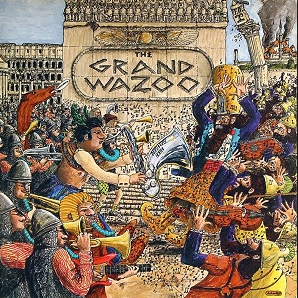
(Cletus Awreetus-Awrightus from the 1972 album The Grand Wazoo by Frank Zappa)
The album The Grand Wazoo is like a culmination point where Frank brought to a close the phase of his recording career which focused mainly on musical composition above lyrical content and subject matter. I think it’s my favourite.
(Sleeping Giant excerpt 2 from the 1972 album Crossings by Herbie Hancock)
“My intention at the time,” explains Mr. Hancock, “was to play music to be listened to with undivided attention; but how many people have the time to approach music that way?” Well, I do… and I always did find the time because it made my brain rejoice! He goes on to explain that these were intended as “heavy musical trips that try to expand people’s minds.” As long as we’re willing to really listen… then, mission accomplished!
(The Grand Wazoo part 1: title track from the 1972 album by Frank Zappa)
To me, the Grand Wazoo was the pinnacle of what Frank was trying to achieve. How many rock musicians tour with a twelve-piece band with a full horn and percussion section? Um… none, except Frank! And contrary to popular belief, Frank Zappa did not smoke marijuana, nor did he allow any of his musicians to. If you were caught getting high on the road, you were out! He had very exacting standards. (Doesn’t mean you can’t benefit from getting high while listening though.)
(Sleeping Giant excerpt 3 from the 1972 album Crossings by Herbie Hancock)
Herbie noticed that when he went to parties though, he would see that his records were there on the shelf among all the others, but his wouldn’t get played at the parties while the other ones did.
(The Grand Wazoo part 2: title track from the 1972 album by Frank Zappa)
The second half of The Grand Wazoo might try your patience a tad, but if the soloing artist doesn’t do it for you, you can always just listen to what the rhythm section’s doing in the background. I’m not sure that Frank cared much what his audience thought; he was on a mission to insert his craft within the burgeoning consciousness of humanity regardless.
(Sleeping Giant excerpt 4 from the 1972 album Crossings by Herbie Hancock)
Eventually Herbie shifted his focus from the experimental and mind-expanding to “making people feel like getting up in the morning and going to work.” But at least we could go about it with a secret smile shining inwardly.
Meanwhile, Frank was slicing through genres and styles with total disregard…
(It Just Might Be a One Shot Deal/Waka/Jawaka from the 1972 album Waka/Jawaka by Frank Zappa)
The Controllers and Social Engineers wouldn’t really regain control of the music scene until the last year of the seventies by promoting punk in Europe and disco in North America. There was really very little they could do to stop the rampant creativity of that era; all they could hope to do was to replace it with something innocuous and numbing. And then the eighties happened. Blech!
(Watermelon Man from the 1973 album Head Hunters by Herbie Hancock)
Our next exploration in music will move forward into the next generation of musicians who grew up on this music from the seventies. Progressive rock has made some exciting new inroads in the new millennium!
Leave your comment